Hands-on Education
While technology and screens have inundated the world around us, an ever-growing need for hands-on education environments has emerged for degrees and certifications of all sorts—from mechanical repairs to medical procedures. Through dedicated spaces for simulation, experimentation, and creativity, we create environments for students to explore new concepts and practices with structured feedback.
Healthcare
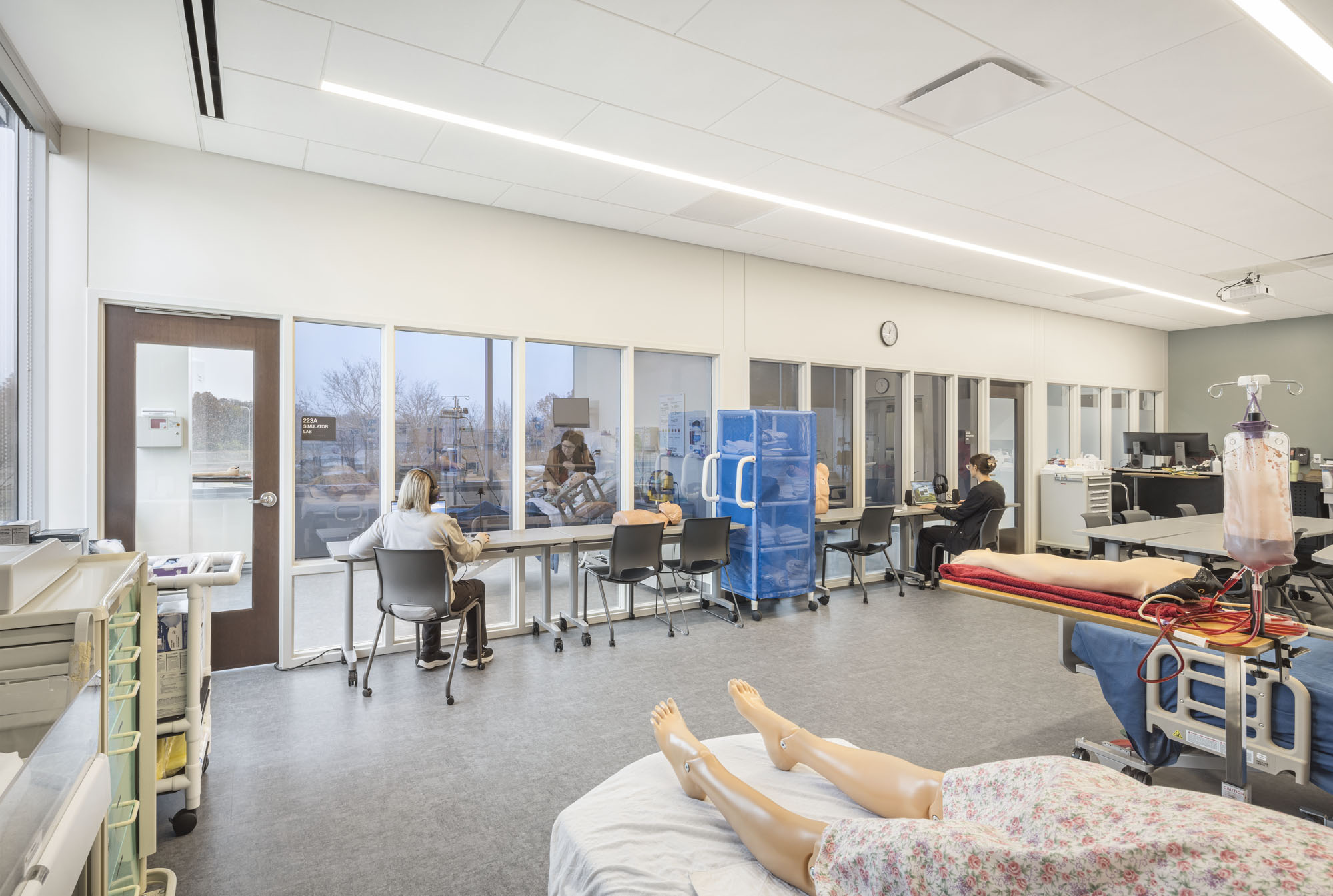
Beyond the rigorous academic studies of healthcare students, hands-on simulation labs for nursing and surgery give future medical professionals the space to learn from trial and error without fear of negative results. In healthcare, the stakes are literally life or death: decisions and actions can make the difference between recovery and serious harm. Hands-on education and simulated environments give students the opportunity to develop clincical judgement, technical skills, communication, and confidence before those skills are tested in real-world situations. Through realistic simulations, students can learn from them, and repeat procedures until they are prepared to provide safe, effective care. This experience bridges the gap between knowing what to do and being ready to do it when it matters most.
For Lake Land College’s Effingham Technology Center, the nursing simulation spaces are interwoven with traditional-desked learning environments. This allows educators to demonstrate proper technique before students engage, learn, and practice procedures with professional equipment.
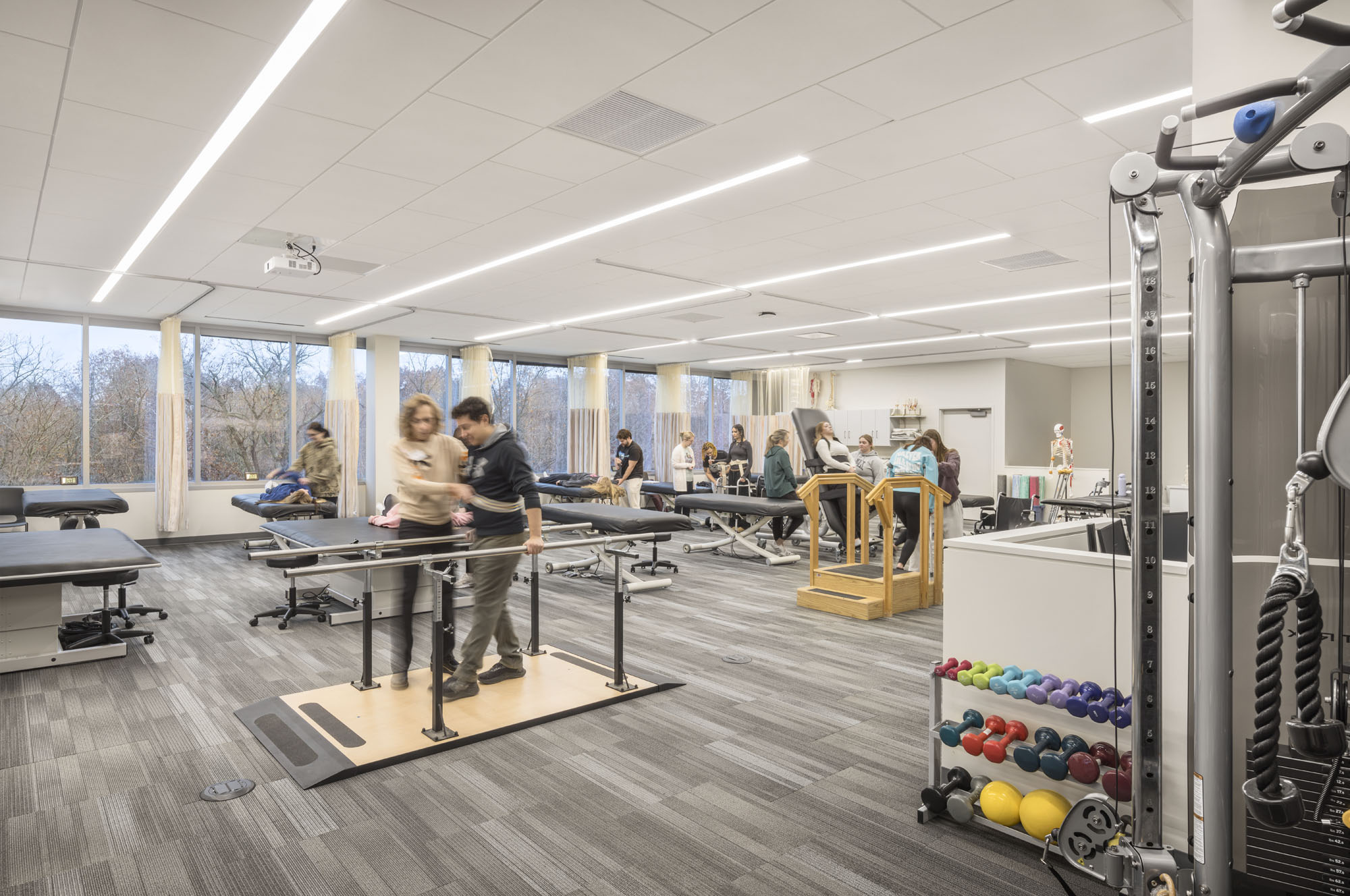
Effingham Technology Center also has a space dedicated to physical therapy and massage therapy programs. With the same equipment professionals use every day, these spaces give students the opportunity to practice on colleagues and volunteers before they graduate and move onto clients and patients.
Fine Arts
While studying the masters through photography or video can inspire students and get the creative juices flowing, nothing compares to putting your hands on a slab of clay or picking up a paintbrush and putting it to canvas. Art studios give students a place to put their artistic skills to practice, providing a space both within a class setting and after hours to bring their vision to life. For non-art students, these spaces provide an outlet from other studies or stressors as well as develop confidence and critical thinking skills.
Illinois State University’s temporary fine arts studios and classrooms provide ample space for students while the Wonsook Kim College of Fine Arts is under construction. An unused commercial building was transformed into a pottery studio with kilns adjacent to campus. Black box classrooms allow students in the performing arts to experiment with lighting and sound control as they develop new stories for the stage and screen. And a flexible gallery space, with movable partitions and adjustable lighting, provides students the space to share their creations and stories.


Makerspaces
As 3D printing and prototyping tools develop, Makerspaces provide students with the exciting opportunity to explore the intersections of creativity and engineering as they design objects and products to make the world a better place.
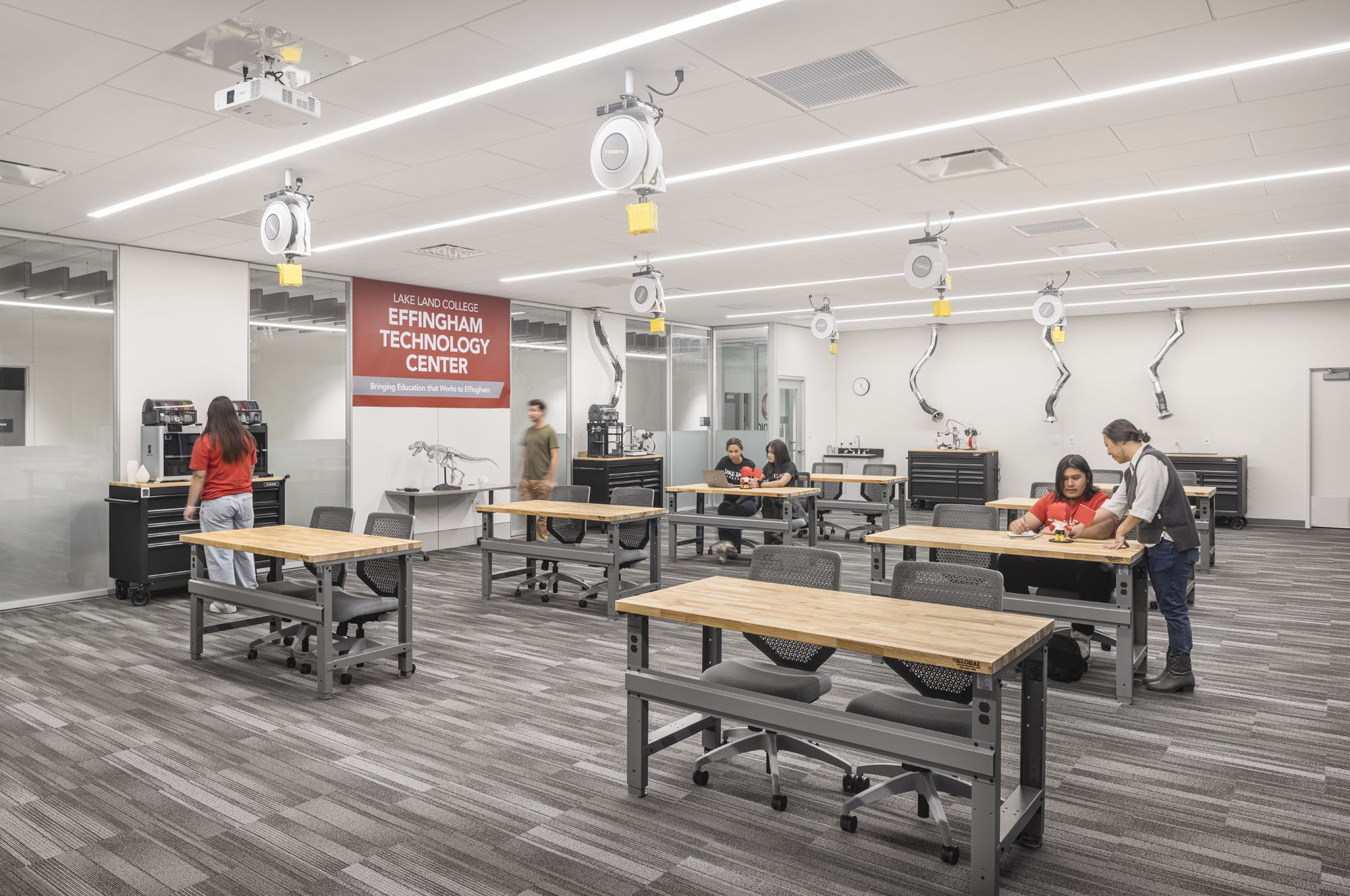
The Makerspace Lab in the Lake Land College Effingham Technology Center features plentiful space and connections for 3D printers, cutting machines, and plotters for students to bring to life their inventions. Large tables provide space for assembly, testing, and discussion.
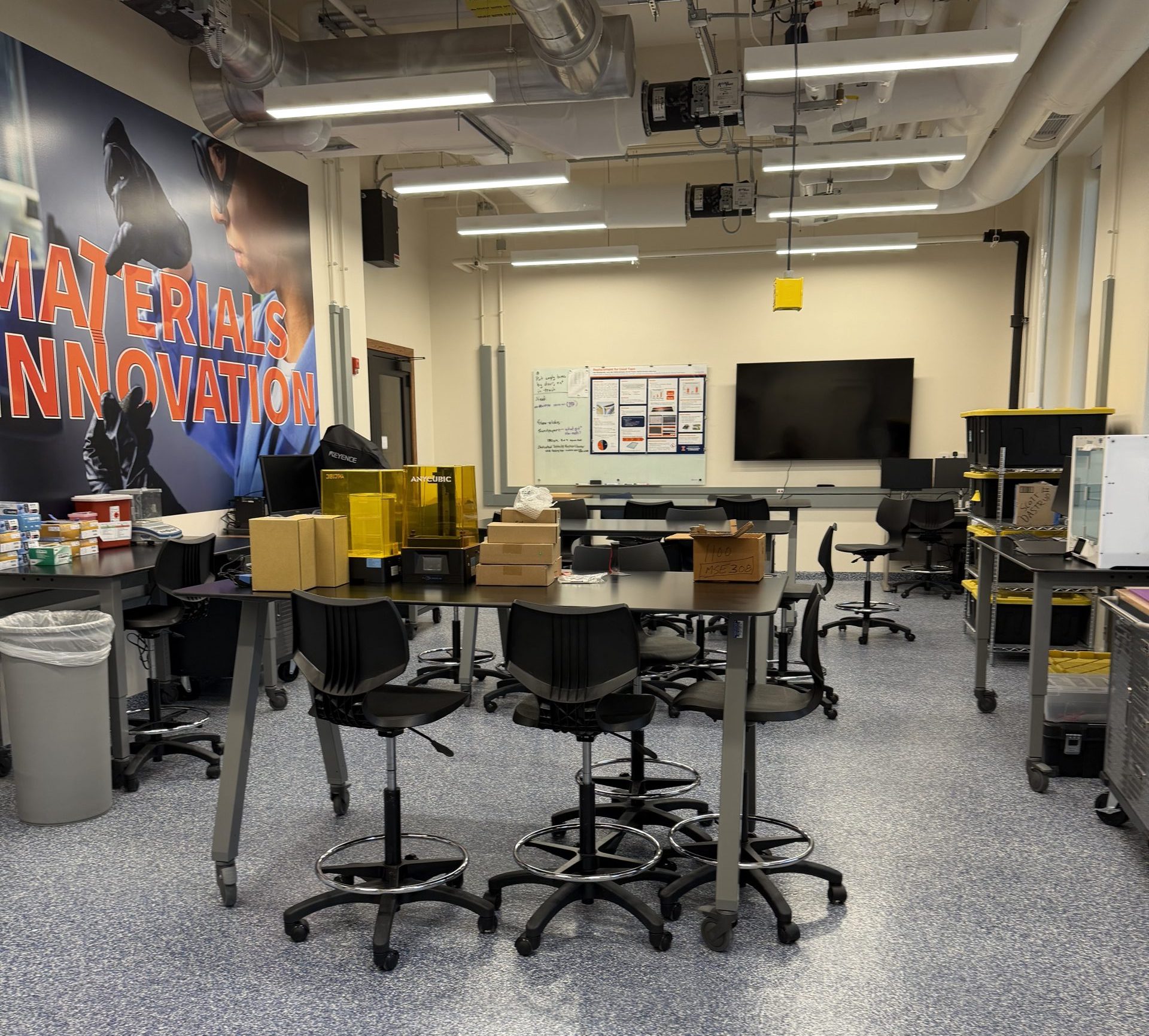
In the University of Illinois Urbana-Champaign’s Material Science & Engineering building, the Eltoukhy Materials Innovation Lab offers a more specialized approach to makerspaces. Two former classrooms were combined to provide necessary space for design-centric tools, including a high-efficiency fumehood, multi-material 3D printers, digital microscopes, scanners, and computer stations with advanced analysis and modeling software, providing students access to previously unavailable instructional laboratory space and equipment in a highly flexible space.
Recording Studios
Audio and video content continue to dominate media. Recording studios allow students to learn the ins and outs of producing podcasts and videos.

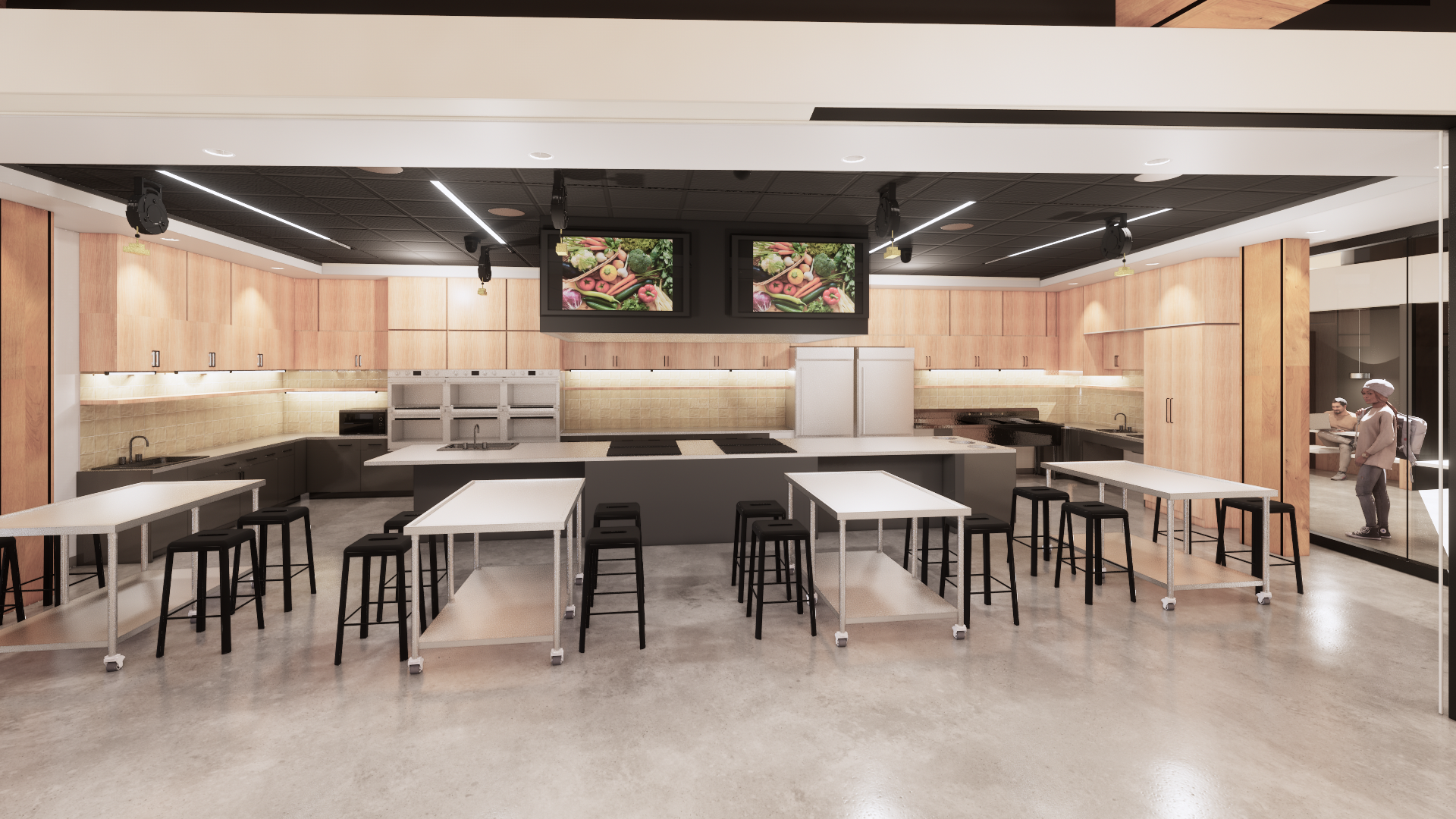
Specialty spaces, such as the Education Kitchen in the Doris Kelley Christopher Illinois Extension Center,, allow students and staff to share food preparation and nutritional information with both in-person and online audiences.
Trade and Technical Skills
As the trades continue to grow, specialized hands-on learning environments help students build the confidence and practical skills needed to step directly into the workforce. For many trades,, proficiency comes through repetition. Students need opportunities to handle specialized tools and equipment, work with real materials, troubleshoot challenges, and master trade-specific safety regulations and protocols. Simulated job-site environments allow students to develop these skills while introducing the pace, teamwork, precision, and problem-solving expected on the job, thus helping students turn classroom knowledge into skills they can put to work immediately. Whether in a dedicated trade school, community college, or on-site training facility such as those used by the National Guard, these spaces connect education to real-world job opportunities and prepare students to contribute safely and effectively.

Designing Career-long Success
Bailey Edward’s architects, interior designers, and engineers can work closely with your instructors and educators to understand the needs of students and trainees. Contact us to learn more about our educational design expertise.