Field Days: Creating Outdoor Learning Environments
Investing in well-designed outdoor learning environments not only fosters a deeper connection to the natural world, but also encourages lifelong curiosity and a love for learning. Prepare your students to explore learning by partaking in outdoor education.
In this Article:

Outdoor learning has become an essential aspect of modern education, offering students unique opportunities to engage with nature while reinforcing academic concepts through hands-on experiences. To understand whether an outdoor learning space is right for you, we will explore the numerous benefits of outdoor learning, the different types of outdoor learning spaces, and discuss important design considerations when selecting or creating the ideal outdoor learning environment. By understanding the educational and environmental impact of these spaces, we can create more dynamic and enriching learning experiences for students of all ages.
Benefits of Outdoor Learning
From the National Center of Biotechnology to the Harvard Graduate School of Education, the benefits of outdoor learning are well documented. These benefits include:
- Improved Academic Performance: As demonstrated by the National Center of Biotechnology’s review on Nature-Specific Outdoor Learning, students benefit from improved academic performance related to increased engagement, improved focus, and enhanced retention presented in outdoor learning environments.
- Physical Health and Wellbeing: Outdoor learning encourages physical activity, exposes students to vitamin D and fresh air, and reduces stress levels. In addition, outdoor learning physically spaces children apart resulting in less germ transfer and illness.
- Enhanced Cognitive Development: Interacting with nature enhances critical thinking, problem solving, and creativity. Outdoor learning is experiential and hands-on, requiring application of knowledge in real-world scenarios, leading to better cognitive development.
- Emotional and Mental Health: The calming effect of natural environments reduces stress, anxiety, and mental fatigue. The more relaxed atmosphere of these learning spaces can provide a positive and open mindset conducive to wellbeing and learning.
- Environmental Stewardship: By connecting with the natural environment, students become environmentally conscious, appreciating biodiversity and understanding the importance of conservation and sustainability.
- Social and Interpersonal Skills: Through play or collaborative tasks, outdoor learning environments strengthen relationship building and encourage communication, problem-solving, and cooperation and leadership abilities.
- Increased Motivation and Engagement: Breaking the monotony of the traditional classroom environment promotes enthusiasm, motivation, and participation.
- Resilience and Independence: Outdoor activities often require students to step out of their comfort zones, solve problems in real time, and adapt to changing environments building resilience, independence, and self-confidence as they navigate challenges and develop solutions.
With the overwhelming benefits of outdoor learning, it’s important to explore the various types of outdoor learning environments to support these outcomes. Each space offers unique opportunities for students to connect with nature and deepen their educational experiences.
Types of Outdoor Learning Spaces
The diversity of outdoor learning spaces offers flexible options for any school, museum, or community center regardless of urban, suburban, or rural location. Outdoor learning spaces include:
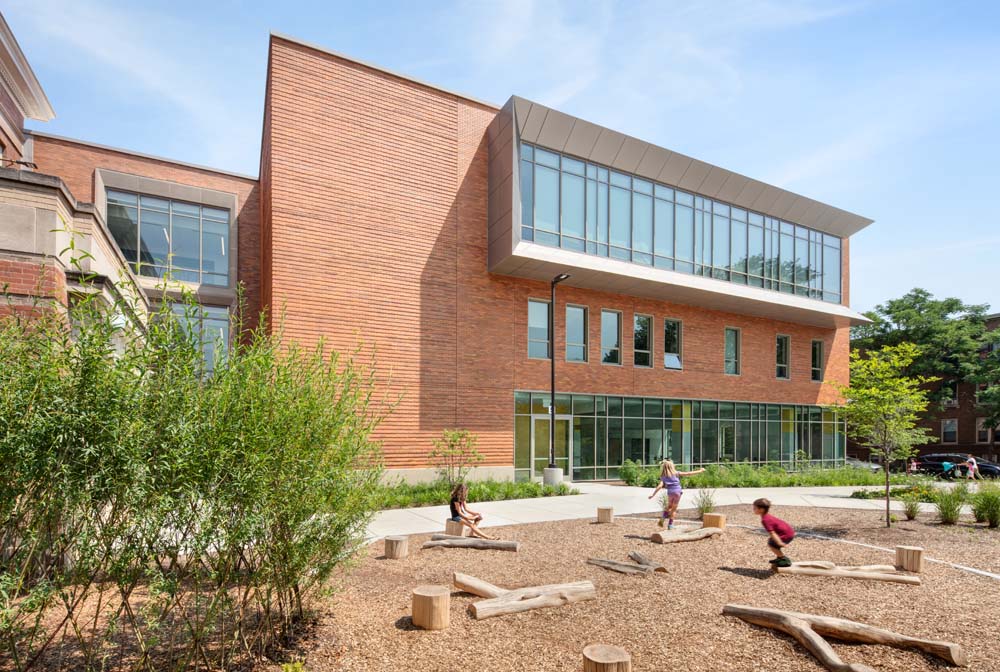
- Playgrounds provide a space for physical education and unstructured play, encouraging social interaction, physical development, and problem-solving. Today’s playgrounds incorporate a variety of play structures to encourage physical movement, pretend-play, sensory activation, and inclusion of all abilities.
- Playing fields offer large, flexible spaces ideal for physical activities, group projects, or outdoor lessons. Traditionally used for organized sports, fields promote teamwork, physical fitness, and the freedom for students to explore and learn through movement.
- Outdoor classrooms are structured spaces with seating and sometimes shelters, designed for conducting lessons in an open-air setting. These areas combine traditional instruction with the benefits of being immersed in nature.
- School gardens serve as living laboratories where students can engage in hands-on learning about biology, ecosystems, and sustainability. They foster a deep connection to nature and understanding of environmental stewardship.
- Greenhouses provide controlled environments for growing plants year-round, offering students opportunities to learn about botany, plant cycles, and agricultural science in a hands-on setting.
- Nature trails are pathways through natural areas that provide opportunities for experiential learning about ecology, wildlife, and environmental science, allowing students to observe ecosystems firsthand.
Design Considerations
Selecting the right outdoor learning environment for your educational institution will depend on several factors unique to your building, community, and educational pedagogy. Let’s briefly review some design considerations to think about when choosing your space:
- Budget: Budget for design, construction, and future maintenance dictates the scale and type of outdoor learning space.
- Geographic Location: Geographic location, including influences of weather, seasonality, and local interests, may affect the use of the outdoor learning space. Outdoor learning can occur in any climate, as evidenced by the Scandinavian concept of udeskole – “outdoor school,” but should be considered when choosing your outdoor learning space. Additional costs may occur to make an outdoor learning environment more appropriate for your geographic location.
- Community: The type of outdoor learning space to choose may depend on whether your institution is in an urban, suburban, or rural community. Nearby amenities, like parks or playgrounds in a city setting, or local economic drivers, like farming in a rural setting, may indicate a need for a different type of outdoor learning space to provide more value for student learning and engagement.
- Available Space: Size and layout of the school grounds determine what type of outdoor spaces can be accommodated, but any size of space can be tailored bring nature into the experience.
- Student Age: The design should be tailored to the developmental needs of the students, with younger learners needing safe, sensory-rich areas and older students benefiting from more complex, hands-on spaces.
- Teaching Goal: The intended learning objectives—whether focused on environmental science, physical education, or creativity—should guide the design to ensure the space supports specific educational outcomes.
